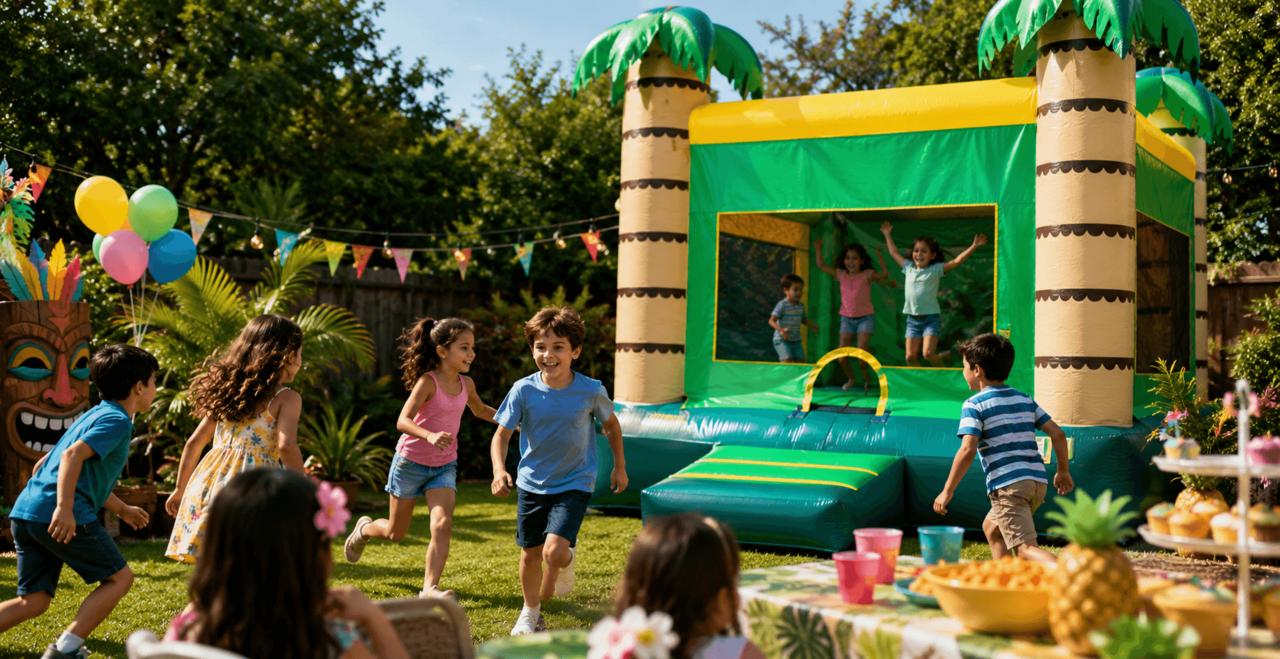
Planning a backyard party sounds simple until you start asking practical questions like: Will the bounce house actually fit in my yard? How many kids can use it safely? Do I need extra space around it?
That’s why so many parents search for a reliable bounce house size guide before booking. The right inflatable can make a party feel effortless. The wrong size can create setup problems, crowding, or safety concerns that nobody wants to deal with on event day.
By the end of this guide, you’ll understand how bounce house sizing works, how to compare inflatable dimensions, how capacity affects your decision, and what to consider before choosing a setup for your backyard party.
Why Bounce House Size Matters More Than Most People Think
Many people assume bigger is automatically better. In reality, the best inflatable is usually the one that fits your space, age group, and guest count comfortably.
A bounce house that’s too large can overwhelm a small backyard or create setup issues around fences, trees, patios, or pools. On the other hand, a unit that’s too small can lead to overcrowding and frustrated kids waiting for turns.
When comparing backyard party inflatables, size affects:
- Safety clearance
- Guest flow
- Age appropriateness
- Weight limits
- Setup access
- Supervision visibility
It also changes the overall feel of the party. A properly sized inflatable gives kids enough room to play without making the yard feel cramped or chaotic.
If you're still learning the basics of inflatable options, this detailed Bounce House Rentals Guide explains the different styles, setups, and rental considerations in more depth.
What Size Bounce House Do You Need for Your Backyard?
One of the most common mistakes is measuring only the inflatable itself instead of the total setup area.
Most inflatables need additional space around the unit for:
- Blowers
- Stakes or sandbags
- Safe entry and exit zones
- Operator access
- Overhead clearance
Typical Bounce House Dimensions
Here’s a general inflatable size chart for common rental categories:
Small Bounce House
Approximate Size: 10’x10’ to 13’x13’
Recommended Space Needed: 15’x15’ minimum
Standard Bounce House
Approximate Size: 15’x15’
Recommended Space Needed: 18’x18’ minimum
Combo Unit
Approximate Size: 15’x20’ to 18’x25’
Recommended Space Needed: 20’x30’ minimum
Obstacle Course
Approximate Size: 30’ to 70’+ long
Recommended Space Needed: Varies significantly
Water Slide
Approximate Size: 20’ to 40’+ long
Recommended Space Needed: Extra clearance required
The “recommended space needed” matters just as much as the inflatable dimensions themselves.
Don’t Forget Vertical Clearance
Trees, power lines, basketball hoops, pergolas, and roof overhangs can become major issues during setup.
Most bounce houses need:
- At least 15–20 feet of overhead clearance
- Flat ground
- Direct access for delivery crews
Before choosing a unit, it helps to measure the width, length, height clearance, and gate openings. A backyard can look large enough visually but still have obstacles that limit inflatable placement.
How Many Kids Fit in a Bounce House Safely?
This is where bounce house capacity becomes important.
Capacity is not just about how many children physically fit inside. It’s about how many can play safely at one time without collisions or instability.
General Capacity Guidelines
Small 10’x10’ Bounce House
Typical Capacity: 4–6 small children
Medium 13’x13’ to 15’x15’ Bounce House
Typical Capacity: 6–8 children
Large Combo Unit
Typical Capacity: 8–10 children
Obstacle Course
Typical Capacity: Rotating participation
Age also matters. A bounce house full of toddlers behaves very differently than one full of older elementary school kids. Larger children create more force and movement inside the inflatable, which affects safe occupancy limits.
That’s why most rental companies separate recommendations by age range, weight limits, and maximum riders.
Mixing toddlers and older kids together is generally discouraged because size differences increase collision risks.
How to Choose the Right Bounce House for Different Age Groups
Not every inflatable works well for every party. The right kids party equipment size depends heavily on the ages of the children using it.
What Size Bounce House Is Best for Toddlers and Younger Kids?
For ages 2–5, smaller bounce houses often work best. Lower walls, shorter slides, and simpler layouts can make the inflatable easier for younger kids to enjoy.
Large obstacle courses may look exciting, but younger children can struggle with taller climbing sections or crowded entrances.
What Size Bounce House Works for Elementary School Kids?
For ages 6–10, combo units are usually popular because they offer more than one activity. Slides, basketball hoops, and larger bounce areas help keep kids engaged longer.
This age group tends to stay active throughout the party, so capacity matters more during peak play times.
What If the Party Has Mixed Ages?
Mixed-age backyard parties are common, especially when siblings are involved. In those cases, medium-sized combo units usually offer the best flexibility.
Separate play rotations may help, and extra supervision becomes more important when toddlers and older kids are using the same inflatable.
Is a Bigger Bounce House Always Better?
Not necessarily.
Larger inflatables come with trade-offs, including more setup space, higher power requirements, larger delivery access needs, and more active supervision.
A giant inflatable in a tight backyard can make the space feel crowded and reduce room for seating, food tables, games, and guest movement.
Professionals usually evaluate the entire event layout, not just the inflatable itself. That includes guest count, backyard traffic flow, safety pathways, visibility for parents, and placement away from pools or grills.
Sometimes a medium-sized inflatable creates a better overall party experience than the largest option available.
What Professionals Look at Before Recommending an Inflatable
Experienced rental teams typically think about more than dimensions alone.
They often evaluate:
- Surface type, such as grass, concrete, or turf
- Backyard slope
- Drainage conditions
- Entry gate width
- Electrical access
- Distance from setup point
- Shade and sun exposure
Weather also matters more than people realize. Wind conditions, wet grass, and soft ground can all affect setup safety and placement decisions.
That’s one reason many families spend time browsing different bounce house categories before choosing a specific style or size.
How Much Space Should You Leave Around a Bounce House?
A good rule is to leave at least 3–5 feet on all sides, plus additional space behind the blower and clear entry and exit paths.
You also want enough room for parent supervision, shoes and belongings, children lining up, and emergency access if needed.
Crowding tables, fences, or other equipment too close to the inflatable can create unnecessary hazards.
Common Backyard Measurement Mistakes
Before booking a bounce house, many people accidentally:
- Measure only grass space without accounting for landscaping
- Forget overhead obstacles
- Ignore gate width for delivery access
- Assume inflatable dimensions equal total setup dimensions
- Overestimate how much usable flat ground they actually have
Taking photos of the yard and measuring carefully ahead of time usually prevents most setup problems.
Frequently Asked Questions About Bounce House Sizes
What size bounce house fits in a small backyard?
Smaller backyards usually work best with inflatables around 10’x10’ to 13’x13’. You’ll still need extra clearance space around the inflatable for safe setup and operation.
How do I know if a bounce house will fit through my gate?
Measure the narrowest part of your gate opening before booking. Delivery crews also need enough room to maneuver equipment safely into the yard.
How much weight can a bounce house hold?
Weight limits vary by inflatable type and manufacturer. Most units have both individual rider limits and total occupancy limits for safe operation.
Can adults use bounce houses too?
Some inflatables are designed for larger weight capacities, but many standard residential bounce houses are intended primarily for children. Always check manufacturer guidelines.
How much room do you need around a bounce house?
Most setups require at least 3–5 feet of clearance on all sides, plus additional room for blower placement and safe entry areas.
Are combo bounce houses bigger than regular bounce houses?
Yes. Combo units usually include additional features like slides or basketball hoops, so they require significantly more space than standard bounce houses.
Final Thoughts on Choosing the Right Bounce House Size
Choosing the right inflatable is less about finding the biggest option and more about finding the right fit for your space, guest list, and age group.
A well-sized bounce house keeps kids comfortable, improves safety, helps the party flow smoothly, and reduces setup complications.
Understanding inflatable dimensions, capacity limits, and backyard layout considerations ahead of time makes the planning process much easier.
If you’d like to explore different inflatable styles and layouts further, the available bounce house rental options and related educational guides can help you compare setups more confidently.