Why Inflatable Party Entertainment Keeps Kids Engaged Longer
You've planned the perfect party, but twenty minutes in, half the kids are scattered across the yard complaining they're bored. It's a scenario that plays out at countless birthday parties — the carefully chosen games fizzle out, the entertainment loses its appeal, and parents scramble to keep everyone occupied.
Inflatable party entertainment solves this problem through a combination of physical engagement, sensory variety, and self-directed play that holds children's attention far longer than traditional party activities. Understanding why this works helps you plan gatherings where kids stay genuinely entertained from start to finish.
This guide explains the psychological and physical factors that make inflatable entertainment uniquely effective at sustaining children's interest, helping you choose the right options for your event.
Table of Contents
- ↓ Which Type of Party Planner Are You?
- ↓ How Physical Activity Sustains Attention
- ↓ The Role of Sensory Variety in Play Duration
- ↓ Why Self-Directed Play Holds Interest
- ↓ Social Interaction Patterns That Extend Engagement
- ↓ The Novelty Factor in Party Entertainment
- ↓ How Different Ages Engage With Inflatables
- ↓ Choosing the Right Inflatable for Maximum Engagement
- ↓ Frequently Asked Questions
Which Type of Party Planner Are You?
The First-Time Host
You're hosting your child's first big birthday party and worried about keeping 15+ kids entertained for three hours. You've heard inflatables work well but aren't sure why they're more effective than games or craft stations.
→ Focus on sections about physical engagement and self-directed play
The Experienced Parent
You've thrown multiple parties and know the pattern: kids get excited initially, then lose interest and start wandering. You're looking for entertainment that maintains energy without constant adult direction.
→ Jump to social dynamics and choosing the right inflatable
The Budget-Conscious Planner
You want to understand whether inflatable rentals deliver enough engagement value to justify the cost compared to organizing your own games or activities. You need concrete reasons why this investment keeps kids occupied longer.
→ Read the novelty factor and age engagement sections
How Physical Activity Sustains Attention
Children's brains are wired to seek movement. When kids engage in physical activity, their bodies release dopamine and endorphins — neurochemicals that create feelings of pleasure and satisfaction. This biological response makes physically active play inherently more engaging than sedentary activities.
Inflatable entertainment capitalizes on this by creating a low-friction environment for continuous movement. Unlike structured games that alternate between active and waiting periods, kids on inflatables maintain near-constant motion — jumping, climbing, sliding, or balancing.
The bounce house rental guide explains how different inflatable designs support varied movement patterns, but the core principle remains consistent: physical exertion creates positive feedback loops that sustain interest.
💡 Key Insight: Children who expend physical energy in bursts are less likely to exhibit the restless behavior that signals boredom. The act of bouncing itself provides continuous sensory feedback that keeps the brain engaged.
The Energy Release Cycle
Young children carry substantial physical energy that needs regular release. When this energy accumulates without outlet, it manifests as disruptive behavior, short attention spans, and requests to leave or do something different.
Inflatables provide a controlled release valve. Kids burn energy at their own pace, take natural breaks when fatigued, then return when recharged. This self-regulating cycle prevents the build-up of restless energy that derails other party activities.
The Role of Sensory Variety in Play Duration
Human brains are pattern-recognition machines that quickly adapt to repetitive stimuli. Once a stimulus becomes predictable, the brain requires less active attention to process it — which is why children lose interest in activities that lack variation.
Inflatable party entertainment creates multi-sensory experiences that resist this adaptation. Each bounce produces different proprioceptive feedback depending on body position, momentum, and surface contact. The unpredictability of movement maintains the brain's active engagement.
Tactile Stimulation
The soft, yielding surface of inflatable walls and floors provides constant tactile input different from solid playground equipment. Kids feel compression, resistance, and give with every movement, creating ongoing sensory novelty.
Vestibular Input
The inner ear's balance sensors receive continuous stimulation from the up-and-down, side-to-side movement. This vestibular engagement is deeply satisfying to developing nervous systems and naturally captivating for extended periods.
Visual Variety
Themed designs with characters, colors, and architectural features give kids' visual systems multiple focal points. Combined with the changing perspective from bouncing, this creates sustained visual interest that static decorations can't match.
Understanding bounce house safety rules helps parents maximize this sensory variety while maintaining safe play environments. Proper supervision allows kids to explore the full range of movement without restriction.
Why Self-Directed Play Holds Interest
Organized party games require adult facilitation — someone to explain rules, manage turns, restart rounds, and resolve disputes. This creates dependency that limits engagement duration. When the facilitating adult steps away or loses focus, the activity collapses.
Inflatables eliminate this dependency through intuitive, self-directed play. There are no complex rules to remember, no winning or losing, and no need for external validation. Kids enter, explore, and create their own play patterns without waiting for adult instruction.
The Autonomy Effect
Psychological research consistently shows that people of all ages engage more deeply in activities where they exercise autonomy. When children control how they play — choosing when to jump high versus low, fast versus slow, alone versus with friends — they invest more attention and remain interested longer.
This autonomy also allows natural skill progression. A child might start with simple bouncing, then attempt higher jumps, then experiment with flips or tricks. Each self-selected challenge maintains the optimal balance between skill and difficulty that psychologists call "flow" — the mental state where time passes unnoticed because engagement is complete.
💡 Pro Tip: The bounce house size guide helps you match inflatable dimensions to your expected guest count, ensuring enough space for autonomous play without overcrowding that limits freedom of movement.
How Kids Create Their Own Challenges
Watch children in an inflatable for fifteen minutes and you'll observe them inventing games spontaneously. One child declares "the floor is lava" and suddenly everyone's climbing walls. Another starts a follow-the-leader pattern through an obstacle course. These self-created games emerge, evolve, and dissolve organically.
This creative freedom sustains interest because the activity never becomes stale. Kids aren't repeating the same pre-defined game until it loses appeal — they're continuously generating new variations that reflect their current mood and energy level.
The Novelty Factor in Party Entertainment
Children encounter playgrounds daily at school, parks, and friends' homes. They own toys, video games, and sports equipment they can access anytime. The familiarity of these options significantly reduces their appeal as party entertainment.
Inflatable party entertainment carries inherent novelty. Most families don't own bounce houses or obstacle courses, making them special-occasion experiences. This scarcity creates heightened interest and engagement that familiar activities can't generate.
How Rarity Amplifies Engagement
The psychological principle of scarcity affects children as strongly as adults. When kids know an inflatable is available for a limited time — typically just a few hours — they're motivated to maximize their experience. This creates natural urgency that sustains focus.
Compare this to a backyard swing set. Kids might play on it briefly, but they know it will be there tomorrow and next week, so there's no incentive for extended engagement right now. The temporary nature of inflatable rentals creates "special event" psychology that drives sustained participation.
⚠️ Important: Novelty alone isn't sufficient. An inflatable that's visually impressive but physically uncomfortable or poorly designed will lose engagement quickly. The novelty factor works because it's paired with the physical and sensory benefits described earlier.
Themed Designs and Imaginative Play
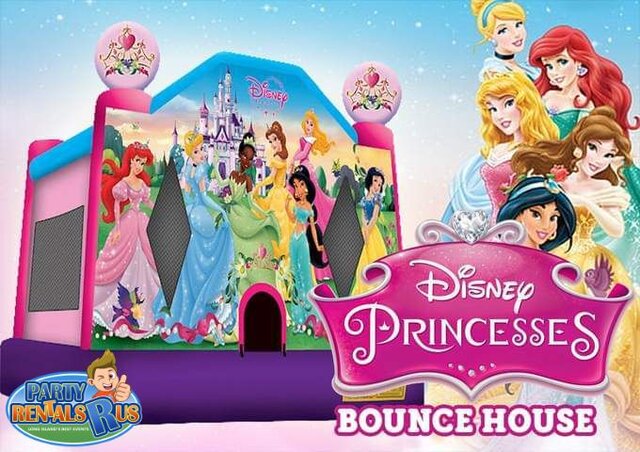
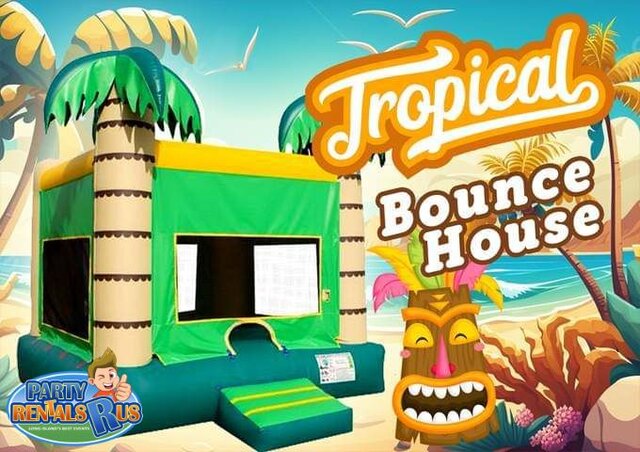
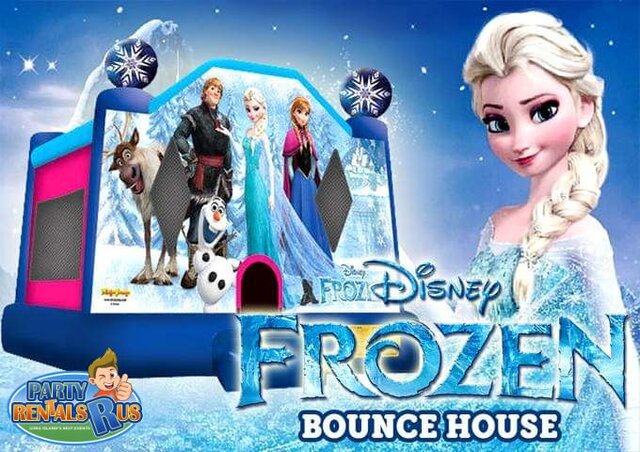
Themed inflatables add another layer to the novelty effect by triggering imaginative play. A castle-themed bounce house becomes a setting for make-believe scenarios. A tropical-themed obstacle course transforms into a jungle adventure.
This imaginative dimension extends engagement duration because it adds narrative possibility to physical activity. Kids aren't just bouncing — they're escaping dragons, exploring ruins, or competing in arena battles their imaginations create.
How Different Ages Engage With Inflatables
Developmental stages significantly influence how children interact with inflatable entertainment and how long they remain engaged. Understanding these patterns helps parents choose appropriate options and set realistic expectations for engagement duration.
Toddler & Preschool
Engagement pattern: Short bursts (10-15 minutes) with frequent breaks
Young children engage intensely but tire quickly. They prefer simple bounce houses with low walls and clear sightlines so parents remain visible. Themes with familiar characters (Disney, Sesame Street) enhance engagement through recognition.
Typical total engagement: 45-60 minutes with breaks
Elementary School
Engagement pattern: Extended sessions (20-30 minutes) with social play
This age group sustains interest longest. They create complex games, form teams, and establish informal competitions. Obstacle courses and combo units with multiple features maximize engagement by offering varied challenges.
Typical total engagement: 90-120 minutes with breaks
Pre-Teen
Engagement pattern: Moderate sessions (15-25 minutes) seeking challenge
Pre-teens need inflatables that offer genuine physical challenge — climbing walls, competitive obstacle courses, or skill-based features. Simple bounce houses lose appeal quickly. They engage most when competing against peers or attempting progressively difficult tricks.
Typical total engagement: 60-90 minutes with breaks
For summer events, combining inflatables with water features significantly extends engagement across all age groups. The summer party cooling ideas guide explores how water elements create additional sensory variety that prevents fatigue-based disengagement.
Choosing the Right Inflatable for Maximum Engagement
Understanding why inflatables sustain engagement helps, but translating that knowledge into specific rental decisions requires considering your particular circumstances. The "best" inflatable is the one that matches your guest demographics, available space, and party duration.
Match Features to Your Guest List
For parties with narrow age ranges (all 6-year-olds, for example), choose inflatables optimized for that developmental stage. Mixed-age parties benefit from combo units or multiple smaller inflatables that serve different skill levels simultaneously.
✓ Maximizes Engagement
- Multiple activity zones within one inflatable
- Features that support both solo and group play
- Challenge elements that allow skill progression
- Adequate size for guest count (not overcrowded)
- Theme alignment with guest interests
✗ Reduces Engagement
- Single-function design with no variety
- Age-inappropriate difficulty level
- Undersized for the number of guests
- Poor visibility for younger children
- Themes that clash with guest preferences
Consider Seasonal Factors
Temperature significantly impacts engagement duration. During hot weather, traditional dry inflatables lose appeal as kids overheat. Water slides and wet combos extend engagement by 30-50% in summer conditions because they address the comfort issue while maintaining the core engagement factors.
The water slide rentals guide details how water features change engagement patterns, particularly for elementary-age children who might otherwise take frequent breaks from physical activity in heat.
💡 Planning Tip: For optimal engagement, rental duration should exceed expected active play time by at least 30%. Kids cycle on and off inflatables naturally, so a 3-hour rental typically provides 2-2.5 hours of actual engaged play when accounting for setup, breaks, and other party activities.
Frequently Asked Questions
Why do inflatable party rentals keep kids engaged longer than other activities? +
Inflatable entertainment combines physical activity, sensory variety, and freedom of movement in a way that holds children's attention naturally. Unlike structured games that require adult direction or toys that become repetitive, inflatables offer open-ended play where kids create their own challenges, compete with friends, and move at their own pace. The physical exertion also releases energy in a controlled way, reducing the restlessness that often leads to boredom at parties.
What age groups benefit most from inflatable party entertainment? +
Inflatable entertainment works well for children ages 3-12, though different styles suit different developmental stages. Toddlers (3-5) thrive in smaller bounce houses with gentle slopes and enclosed spaces. Elementary-age kids (6-9) enjoy obstacle courses and themed inflatables that support imaginative play. Pre-teens (10-12) gravitate toward challenge-based inflatables like climbing walls or competitive obstacle courses that test their growing coordination.
How long do kids typically stay engaged with a single inflatable? +
Most children actively play on a single inflatable for 45-90 minutes before seeking a break or different activity. Engagement duration depends on the inflatable's complexity, the number of children present, and whether the design supports varied play patterns. Obstacle courses and multi-feature inflatables sustain interest longer than simple bounce houses because they offer different challenges and social dynamics within the same structure.
Do inflatable rentals work better than other outdoor party activities? +
Inflatables excel at creating sustained, self-directed play that requires minimal adult facilitation. Unlike games that need constant supervision or activities that require setup between rounds, kids cycle through inflatable play naturally. They also accommodate mixed age groups better than most organized games, allowing siblings and friends of different ages to participate simultaneously without extensive rule modifications.
What makes inflatable entertainment different from playground equipment? +
The novelty factor plays a significant role. Most kids have regular access to playgrounds, but inflatables represent something special and temporary, which increases their perceived value and excitement. The bouncing sensation also provides unique sensory input that fixed equipment can't replicate. Additionally, inflatables create a contained play environment where kids feel a sense of ownership and control over their space for the duration of the party.
How many kids can play on an inflatable at once without losing engagement? +
Engagement remains high when the ratio allows movement without crowding. A standard 13x13 bounce house comfortably entertains 4-6 kids at once. Larger obstacle courses can handle 8-12 participants effectively. When inflatables become overcrowded, wait times increase and active play decreases, which reduces overall engagement. Matching inflatable size to expected guest count prevents this drop-off.
Ready to Plan a Party Kids Won't Want to Leave?
Understanding why inflatable entertainment works is the first step. Choosing the right inflatable for your specific party creates the engagement that turns a good event into an unforgettable celebration.
Browse our complete selection of bounce houses and inflatables to explore options matched to different age groups, party sizes, and themes.
Book Your Party Now!Questions about which inflatable fits your event? Call us at 516-448-0323 — we help match entertainment to your specific needs.
Social Interaction Patterns That Extend Engagement
Children are inherently social beings who seek peer interaction. Activities that facilitate natural, low-pressure socialization hold attention longer than those requiring forced interaction or individual participation.
Inflatables create ideal conditions for organic social play. Kids interact through parallel play (bouncing near each other), cooperative play (helping someone climb), and competitive play (racing through obstacles) — all without rigid social structures that can create anxiety or exclusion.
Flexible Group Dynamics
Unlike team games that require fixed numbers of players, inflatable entertainment accommodates fluid group sizes. A shy child can play alone until comfortable, then gradually integrate with others. A social butterfly can engage multiple friends simultaneously.
This flexibility prevents the engagement drop-off that happens when someone gets "out" in elimination games or when teams become unbalanced. Every child remains active and included regardless of how the social dynamics shift.
Shared Experience Without Competition
While kids sometimes create informal competitions on inflatables, the environment doesn't inherently produce winners and losers. This absence of formal competition reduces the negative emotions that drive disengagement.
Kids who struggle with competitive games stay engaged because they're not constantly confronting failure. Meanwhile, athletically gifted children still find challenge through self-created goals and peer recognition without formal scoring.
For parties that combine multiple elements, the backyard birthday party planning guide offers strategies for balancing inflatable entertainment with other activities to maximize social engagement across different personality types.